Building a Strong Company Culture with Remote / Mixed Work Environments

23 Sep

Introduction

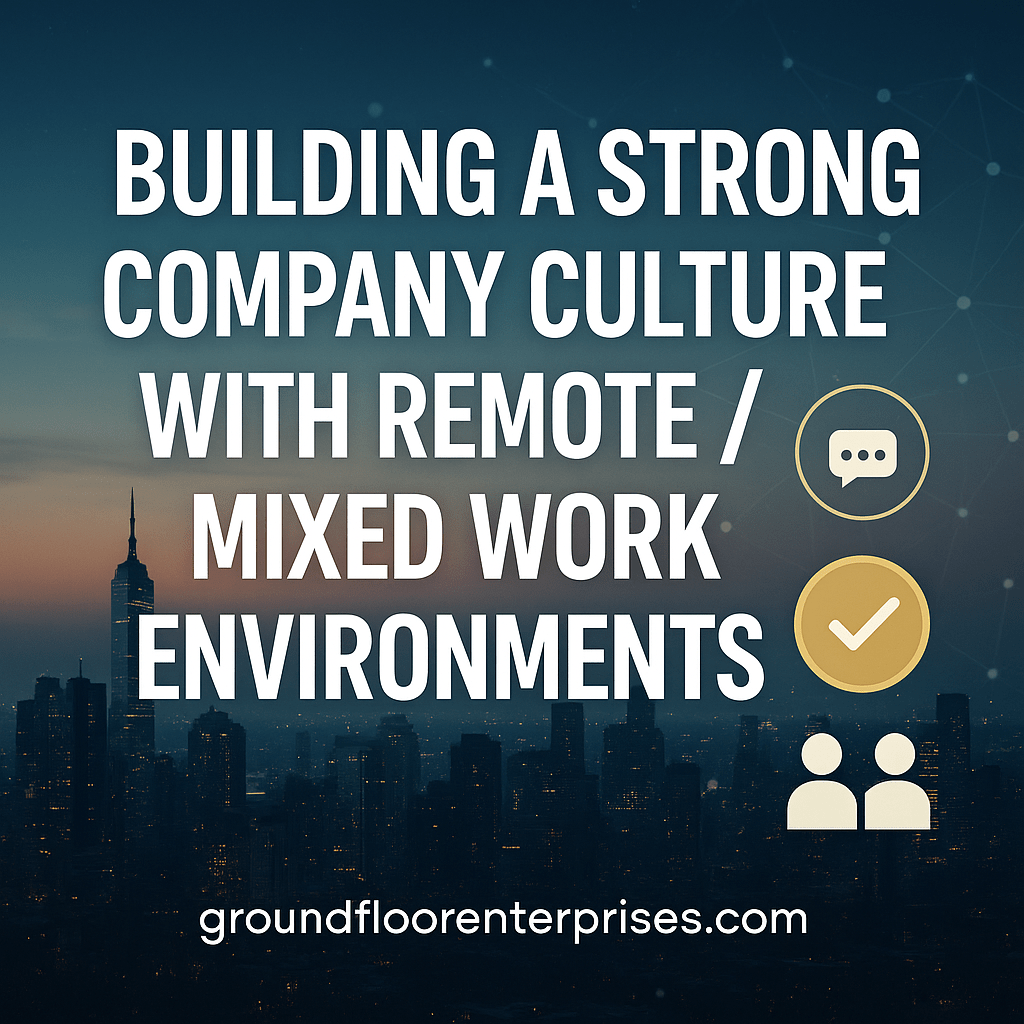
The way we work has changed forever. Remote and hybrid setups are no longer the exception — they’re the new normal. But here’s the truth: company culture doesn’t stop when your team logs in from different cities or time zones. In fact, culture becomes even more important. A strong culture is the glue that keeps people motivated, connected, and moving toward the same vision.

1. Define and Live by Clear Core Values

Culture begins with clarity. Remote employees need to know what your business stands for, beyond just profits. Write down your core values and make sure they show up in everyday communication — whether it’s on Slack, in Zoom meetings, or through company newsletters. When people understand the “why” behind their work, distance doesn’t weaken culture; it strengthens it.

Action Step: Revisit your company’s mission and values. Share them often and tie them to decisions and wins.

2. Communicate with Consistency and Transparency

Silence creates uncertainty. In a remote or hybrid setup, overcommunication beats under-communication every time. Leaders should share updates frequently and invite feedback. Simple gestures — like weekly video check-ins or transparent progress reports — go a long way toward building trust.

Action Step: Schedule a recurring “all hands” update, even if it’s just 15 minutes a week, to keep everyone on the same page.

3. Foster Human Connection Beyond Work

Culture thrives when people feel like more than just coworkers. Build space for personal connections — virtual coffee breaks, online game nights, or casual chat channels. These small touchpoints create big loyalty.

Action Step: Start each team meeting with a quick “personal win of the week” to keep conversations human.

4. Empower Autonomy and Flexibility

Remote work shouldn’t mean micromanaging. Instead, focus on outcomes, not hours. Empower your team to own their schedules and deliverables. Flexibility shows trust, and trust is at the core of every strong culture.

Action Step: Replace rigid rules with clear goals. Let results speak louder than clock-in times.

5. Recognize and Celebrate Achievements

Recognition fuels culture. In distributed environments, it’s easy for wins to go unnoticed. Celebrate often — whether it’s a shout-out in chat, a virtual award, or simply spotlighting someone’s contribution in a meeting.

Action Step: Create a “Wins” channel where the team can highlight each other’s successes, big or small.

Conclusion: Culture is Built, Not Found

A strong company culture doesn’t happen by accident — it’s intentional. Whether your team is across town or across continents, the way you communicate, connect, and celebrate defines who you are. Build it with care, live it every day, and your culture will carry your business further than any office walls ever could.
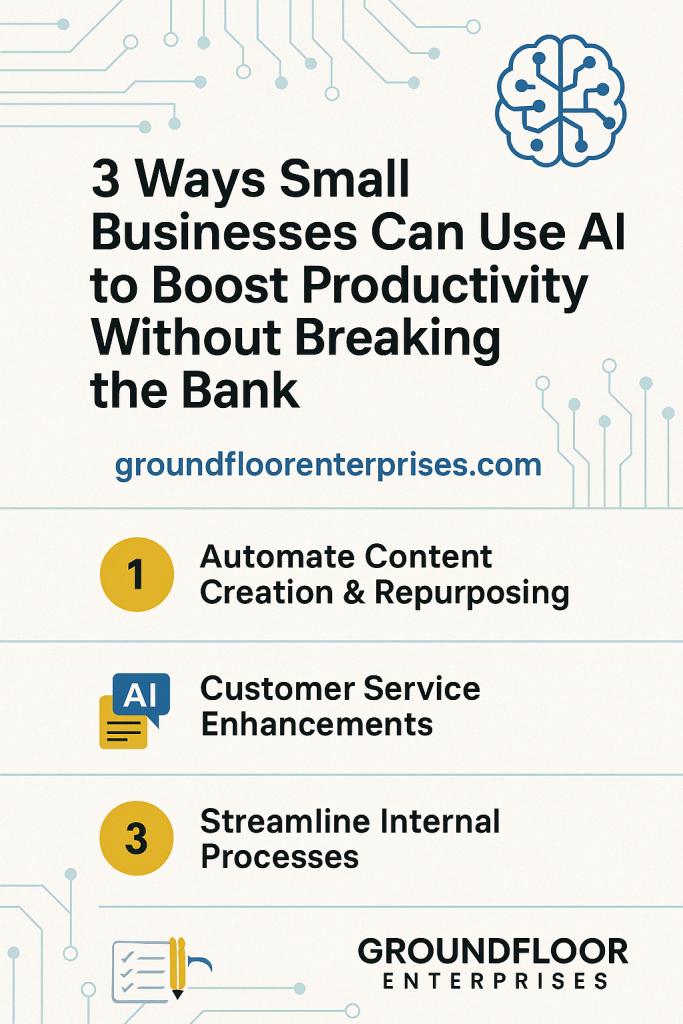
3 Ways Small Businesses Can Use AI to Boost Productivity Without Breaking the Bank

16 Sep

Introduction

AI isn’t just for big corporations. Small businesses today can tap into affordable AI tools to streamline work, reduce repetitive tasks, and free up time to focus on what matters most: growth, creativity, and customer experience.

1. Automate Content Creation & Repurposing

Use AI writing assistants (e.g. chat-based tools) to draft blog posts, social media captions, and newsletters faster. Repurpose longer blog content into short social snippets or visuals using design tools. Tip: Always add your “voice” or brand touch; review and edit so it feels human.

2. Customer Service Enhancements

Implement chatbots or AI-powered FAQs to handle common inquiries, freeing up your team for more complex requests. Use tools that help auto-prioritize customer emails or tickets. Example: set up canned responses for recurring issues, but monitor for when personalization is needed.

3. Streamline Internal Processes

Automate scheduling and reminders (for meetings, payments, deadlines). Use tools that sync data across apps (so you don’t manually enter it multiple times). Leverage voice-to-text or transcription tools to quickly convert meeting notes.

Conclusion & Action Steps

Pick one AI or automation tool to test this week. Set clear metrics: time saved, fewer errors, happier customers, etc. Re-evaluate after a month, iterate, and scale.

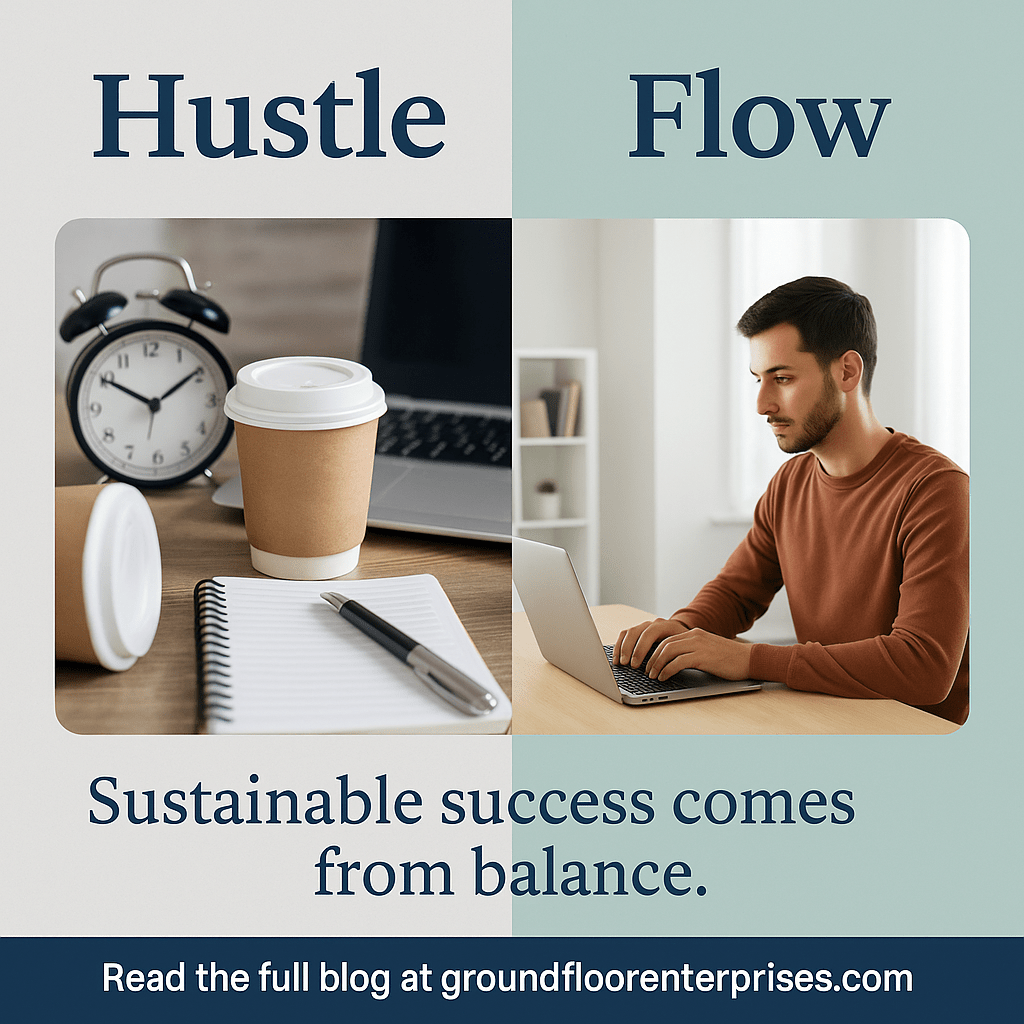
From Hustle to Flow: Why Entrepreneurs Need Balance to Grow

13 Sep

The hustle culture has been glorified for years. Late nights, early mornings, and endless grinding are often worn as a badge of honor. But let’s be honest—working yourself into the ground isn’t sustainable, and it doesn’t guarantee success. If anything, it can hold you back.

The Myth of Hustle

The idea that “more hours = more success” is a trap. Yes, entrepreneurship requires sacrifice, discipline, and hard work. But endless hustle often leads to burnout, poor decision-making, and a lack of creativity—the very things you need to grow.

When your body is drained and your mind is foggy, you’re not building a business—you’re digging a hole. True growth doesn’t come from sheer exhaustion. It comes from clarity, strategy, and flow.

What Is Flow?

Flow isn’t about doing less work; it’s about doing the right work at the right time. It’s that sweet spot where you’re focused, energized, and productive without feeling like you’re forcing every step.

Instead of measuring success by hours worked, flow is about measuring by results achieved. A focused two hours of intentional work can accomplish more than ten hours of scattered hustling.

How to Shift from Hustle to Flow

Prioritize Energy, Not Just Time. Time management is important, but energy management is the real game-changer. Sleep well, fuel your body, and take breaks—you’ll get more done in less time. Work in Focused Blocks. Stop multitasking. Dedicate blocks of time to one task, eliminate distractions, and watch how much faster things get done. Set Boundaries. Hustle culture glorifies being “always on.” Flow requires separation. Define your work hours and personal hours, and protect both. Delegate and Automate. You don’t have to do everything yourself. Delegate tasks to others and use tools that automate repetitive work so you can focus on growth. Build Routines that Support You. Morning rituals, exercise, journaling, or quiet reflection—these create mental clarity and keep you in alignment before the day pulls you in different directions.

Why Balance Matters for Growth

Balance isn’t about slacking off—it’s about sustainability. Businesses don’t grow in one massive sprint; they grow through consistent, steady progress. That requires you to be sharp, creative, and resilient—not constantly exhausted.

When you create balance, you create space for fresh ideas, better relationships, and stronger leadership. Your business benefits because you’re showing up at your best—not your most drained.

Final Thoughts

Hustle may get you started, but flow will keep you going. The entrepreneurs who thrive long-term aren’t the ones who burn the candle at both ends—they’re the ones who know when to push and when to pause.

So, stop glorifying grind and start embracing balance. Because growth doesn’t come from doing everything—it comes from doing the right things with energy, purpose, and flow.

The Marketing Myths That Are Holding Your Business Back

6 Sep

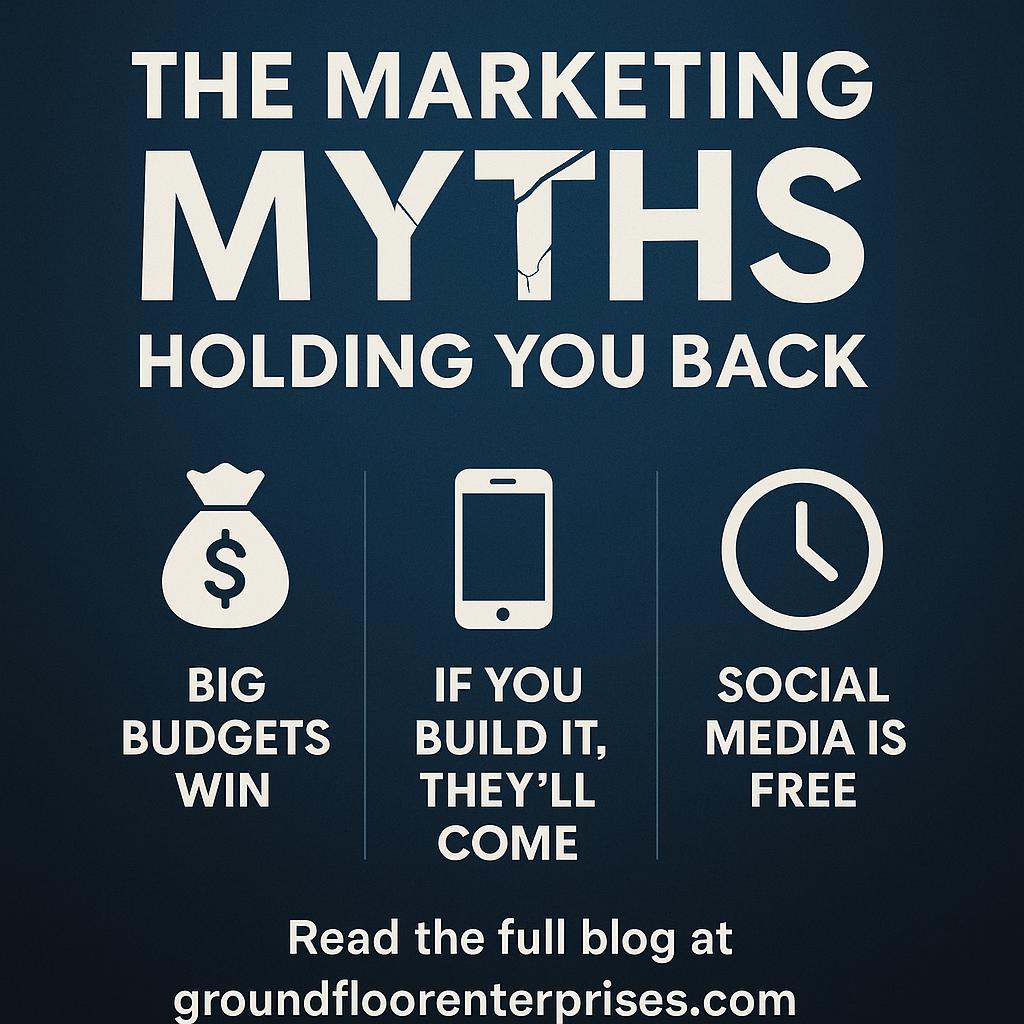
Marketing can make or break a business. Yet, far too many entrepreneurs operate under false assumptions—myths that keep them stuck, overspending, or missing opportunities. Let’s set the record straight and uncover the myths that might be holding your business back.

Myth 1: “You Need a Huge Budget to Compete”

This is one of the most common misconceptions. Big brands may throw millions into advertising, but small businesses win by being smarter, not louder. Social media, content marketing, and email campaigns can cost little to nothing—and often deliver more authentic results. Creativity, consistency, and understanding your audience will outshine deep pockets every time.

Myth 2: “If You Build It, They Will Come”

Launching a website, opening a store, or posting a product isn’t enough. Many entrepreneurs believe quality alone will attract customers. The truth? Visibility drives sales. Without promotion—whether through ads, social media, SEO, or networking—your business risks being invisible. Great products matter, but great marketing puts them in front of people.

Myth 3: “Marketing Is Just Advertising”

Ads are only one piece of the puzzle. Real marketing is about understanding your audience, creating value, and building relationships. From branding and storytelling to customer service and word-of-mouth, marketing touches every corner of your business. Limiting your view of marketing to “just ads” is like trying to build a house with only one tool.

Myth 4: “Social Media Is Free Marketing”

Posting on Facebook or Instagram may not cost money, but it does cost time, effort, and strategy. Without a clear plan, social media can become a time drain instead of a sales driver. And while organic reach is powerful, algorithms often limit how many people see your content. Smart entrepreneurs treat social media as an investment—using both organic content and paid strategies when needed.

Myth 5: “Marketing Success Happens Overnight”

We live in a world of viral content, but waiting for a “big break” is unrealistic. Real growth happens through consistent effort. It may take months to build an audience, establish trust, and see results. Marketing is a marathon, not a sprint—and patience pays off.

Breaking Free from Myths

The most successful entrepreneurs aren’t the ones who spend the most—they’re the ones who understand marketing as a process of building awareness, trust, and connection. When you break free from these myths, you open the door to smarter strategies and better results.

The truth is simple: marketing isn’t magic, it’s momentum. And once you see through the myths, you can start building a business that moves forward with clarity and purpose.

Storytelling Over Selling: How to Make Customers Root for Your Brand

4 Sep

In a world where ads bombard us every second, people are no longer moved by pushy sales pitches. What they crave is connection. That’s why the most powerful brands today don’t just sell products—they tell stories.

Why Storytelling Works

Storytelling taps into something deeper than logic: emotion. Customers may justify their purchases with facts, but they decide with feelings. When you tell a story, you’re not just marketing—you’re inviting people into an experience they can see themselves in.

Think about Nike. They don’t just sell shoes; they tell stories of perseverance, grit, and victory. Apple doesn’t just sell devices; they tell stories about creativity, individuality, and thinking differently. People don’t root for these brands because of features—they root for them because of the story behind them.

Making Your Customer the Hero

The golden rule of brand storytelling: it’s not about you, it’s about them. Too many businesses make the mistake of casting themselves as the star. Customers don’t want to hear a brand brag. They want to see themselves as the hero of the journey—with your product or service as the guide.

For example, if you own a bakery, don’t just say: “We make fresh pies daily.” Instead, tell a story: “Imagine bringing a warm, homemade pie to your family table—the kind your grandmother used to make. That’s why we bake, so you can create moments worth remembering.”

That story makes your customer the hero. The pie is not just dessert—it’s part of their family’s story.

Elements of a Great Brand Story

Relatability. People need to see themselves in the story. Speak to their struggles, dreams, and values. Emotion. Tap into feelings—joy, nostalgia, hope, pride. Emotion creates memory. Conflict and Resolution. Every good story has tension. Show the problem (the struggle) and how your brand helps resolve it. Authenticity. Stories must be true to your values. If people sense you’re faking it, trust is gone.

How to Start Telling Your Story

Share Your Why. Why did you start your business? Share that journey—it’s often the most powerful story you have. Use Customer Stories. Highlight real testimonials and experiences. This proves your story lives beyond marketing. Show Behind the Scenes. Give people a glimpse of the process, the team, or the inspiration behind your work. Be Consistent. Every post, ad, and conversation should echo the same story. Repetition builds belief.

Final Thoughts

Selling may get you a transaction. Storytelling gets you loyalty. When customers root for your brand, they don’t just buy once—they keep coming back, and they tell others about you.

So, stop leading with features and discounts. Start leading with stories that make people feel, connect, and believe. Because in the end, people don’t just want products—they want to be part of a story worth sharing.

Balancing Life and Business: The Struggle, the Strategy, the Process

30 Aug

Entrepreneurship is often painted as freedom—working on your own terms, building something meaningful, and living life without limits. What people don’t talk about enough is the struggle: balancing business goals with real life.

The Struggle

Running a business demands time, energy, and focus. Life demands the same. Family responsibilities, health, friendships, and personal downtime all compete for space with deadlines, clients, and growth targets. The truth is, trying to juggle both can feel like you’re living in two different worlds.

The struggle comes from believing you must give 100% to both at the same time. That’s impossible—and it leads to burnout. The reality is, balance isn’t about equal distribution, it’s about intentional prioritization. Some days, business will need more of you. Other days, family and personal life must come first. The sooner you accept that balance shifts, the less guilty you’ll feel.

The Strategy

The key to balance is structure. Without a plan, life and business will both feel chaotic. Here are strategies that help:

Set Boundaries. Define when you’re working and when you’re not. This keeps business from swallowing up every part of your day. Prioritize Daily. Don’t overload your to-do list. Identify the 3 most important tasks for your business and the 3 most important for your personal life each day. Leverage Systems. Use tools for scheduling, automating emails, or managing projects. Systems give you back hours you can spend on life. Communicate Clearly. Let your family and business partners know your schedule. This prevents conflicts and sets expectations. Protect Your Health. If your body and mind are drained, both life and business suffer. Exercise, sleep, and good food are non-negotiable.

The Process

Balance isn’t achieved overnight—it’s a process of constant adjustment. Here’s what that looks like:

Start Small. Don’t try to overhaul your schedule in a week. Add one habit at a time—like setting a strict end time for work. Track and Reflect. At the end of the week, ask: Did I neglect one area of my life too much? What went well? What needs adjusting? Stay Flexible. Life is unpredictable. A sick child, a sudden opportunity, or a personal crisis will throw off your plan. Flexibility is what keeps balance possible. Redefine Success. Sometimes success isn’t a huge business win—it’s making time for dinner with your family or taking a day off for your own peace of mind.

Final Thoughts

Balancing life and business is not a perfect science—it’s a daily decision. You will struggle, you will adjust, and you will learn. The important part is recognizing that both matter, and neither has to be sacrificed for the other if you commit to structure, communication, and flexibility.

Entrepreneurship isn’t just about building a business—it’s about building a life worth living. And balance is the foundation that makes both sustainable.

Build Your Own: Why Entrepreneurship Is the Best Investment You’ll Ever Make

26 Aug

Have you ever felt that quiet tug—the one that tells you your ideas could be more than just “what ifs”? That tug is entrepreneurship calling. And if you’ve been waiting for a sign to step forward, here it is: now is the time to build something of your own.

The Power of Ownership

When you create your own business, you do more than sell a product or service—you take ownership of your future. A job can give you stability, but it also limits your ceiling. Someone else decides your hours, your pay, and even the direction of your career. Entrepreneurship flips that script. You create the opportunity, you set the vision, and you decide how far you want to go.

Solving Problems, Creating Impact

Every successful business begins with solving a problem. Think about it: the products and services you use daily exist because someone recognized a gap and had the courage to fill it. You don’t need to invent the next tech giant or disrupt an entire industry. Sometimes entrepreneurship is about simple, powerful solutions—a neighborhood cleaning service, a local bakery, a consulting business built on skills you already have.

What matters most is impact. Your idea can change lives, even in small ways. And that’s the true reward of entrepreneurship: knowing that something you built creates value for others.

Freedom Through Action

One of the biggest myths about entrepreneurship is that it requires massive funding or a perfect plan. The truth? Most businesses start small, fueled more by determination than by capital. Action beats perfection every time.

Start where you are with what you have. Write down your idea. Test it with friends or your community. Use free tools to design a logo, build a simple website, or post your offer on social media. Momentum builds confidence, and confidence opens doors.

The more you act, the more freedom you create. Freedom of time, freedom of income, and freedom of choice. Entrepreneurship is not about escaping hard work—it’s about working with purpose and building something that belongs to you.

Why You Must Start Now

The longer you wait, the more reasons you’ll find not to begin. But opportunity doesn’t knock forever. The economy changes, trends shift, and someone else may seize the very idea you’re sitting on today.

Starting your own business doesn’t mean you quit everything overnight. It can begin as a side hustle, a part-time passion project that grows. What matters most is starting. Each step you take makes the vision more real.

The Entrepreneur’s Mindset

Every entrepreneur shares one thing in common: belief. Belief that their idea matters, belief that their effort will pay off, and belief that even failure is just another lesson on the way to success.

So if you feel that tug, listen to it. Your future self will thank you for being bold enough to try.

Because in the end, the greatest risk isn’t starting a business—it’s never giving yourself the chance.

Crab Pie

25 Aug

What’s your favorite recipe?

A fresh crab pie is my favorite recipe.

I made these

Jumbo lump crab meat, eggs, sharp cheddar cheese, heavy cream and old bay seasoning . 45 minutes and there you have it. Pure heaven and delicious food.

From Hustle to Empire: Key Strategies to Grow Your Small Business

5 May

Starting a small business is no small feat—it takes grit, passion, and relentless perseverance. But growing that business? That’s where the real adventure begins.

Scaling a business means expanding your impact, building a stronger team, and increasing your revenue. It’s about transforming your hustle into an empire. Whether you’re running a side gig or a full-time operation, these key strategies will help you take your business to the next level.

1. Clarify Your Vision and Goals

Growth starts with direction. Ask yourself: Where do I want my business to be in 1 year? 3 years? 5 years?

A clear vision helps you make strategic decisions and align your daily actions with long-term objectives. Break down your goals into actionable steps and revisit them often to stay focused.

“If you don’t know where you’re going, you’ll end up somewhere else.” — Yogi Berra

2. Know Your Customers Inside Out

Your customers are the heartbeat of your business. Get obsessed with their needs, pain points, and desires. Conduct surveys, read reviews (yours and your competitors’), and engage with them directly.

The better you know them, the better you can serve them—and satisfied customers become loyal fans who spread the word.

3. Systematize and Delegate

If everything depends on you, your business has a ceiling. Start building systems that others can run. Whether it’s automating emails, streamlining your sales funnel, or hiring a virtual assistant, freeing up your time allows you to focus on strategy and growth.

Think of yourself not just as a doer, but as a builder.

4. Double Down on What’s Working

Look at your data. What products, services, or marketing channels are bringing in the most value? Instead of trying to do everything, focus your resources on the activities with the highest return.

Success often comes from mastering a few things—not doing all the things.

5. Invest in Marketing That Converts

Brand awareness is great—but conversions keep the lights on. Create a strong online presence, master one or two marketing platforms, and craft messaging that speaks directly to your ideal customer.

Don’t be afraid to invest in paid ads, SEO, or email marketing if it helps you acquire and retain customers profitably.

6. Build a Rockstar Team

You can go fast alone, but you’ll go far with the right team. Hire people who are not just talented, but who share your values and vision. Empower them, train them, and watch them take your business further than you could alone.

7. Stay Financially Savvy

Track your numbers like a hawk. Understand your cash flow, profit margins, and customer acquisition costs. Scaling without financial clarity is like flying blind.

Use tools or hire a financial advisor to help you make informed decisions as you grow.

8. Stay Resilient and Keep Learning

Growth isn’t a straight line. There will be setbacks, slow seasons, and moments of doubt. The key is to keep moving, keep learning, and adapt as needed.

Surround yourself with mentors, join entrepreneurial communities, and never stop leveling up.

Final Thoughts: You Were Built for This

Scaling a business is more than just numbers—it’s about impact, freedom, and fulfilling the dream you dared to start. Don’t wait for the perfect moment. Take action with what you have, where you are.

Remember, every empire started with a single brave step. Your next step might just be the one that changes everything.

Now go build something incredible.https://groundfloorenteprises.com/2025/08/24/the-entrepreneurs-edge-why-now-is-always-the-right-time

Meet the Chaos Navigator

2 May

Anatomy of a Calm Strategist”**

The Quiet Power of Thinking Before You Leap*

Introduction: The Myth We Need Right Now

Imagine a world where every problem is met with a flurry of tweets, knee-jerk decisions, and panic-driven solutions. Now imagine someone who moves differently—a figure who pauses, observes, and thinks while the world screams. This is the Chaos Navigator, the beating heart of MindRebellion. He’s not a hero with a cape or a genius with a god complex. He’s a mirror held up to our best selves, proving that calm isn’t passive—it’s revolutionary.

In this first installment of The MindRebellion Chronicles, we dissect the DNA of this archetype. Why does he matter now? Because chaos is the new normal, and we’re all secretly craving a playbook.


Part 1: The Traits of a Chaos Navigator

1. Silence as a Weapon

In a world addicted to noise, silence is unnerving. The Chaos Navigator wields it like a scalpel.

  • Example: Think of Aaron Sorkin’s Jed Bartlet (The West Wing), who often disarms opponents by saying nothing, forcing them to fill the void with their own doubts.
  • Why It Works: Silence creates space for observation. It’s not about withholding—it’s about listening to the chaos until it reveals its patterns.

2. Curiosity Over Panic

Panic asks, “What’s the quickest escape?” Curiosity asks, “What’s hiding here?”

  • Case Study: During the 1982 Tylenol crisis, CEO James Burke didn’t rush to blame. He asked, “How do we protect people first?”—a move that saved lives and the brand.
  • MindRebellion Lens: Our protagonist treats chaos like a puzzle, not a threat. In the upcoming Quiet Strategist series, he dissects a hostage negotiator’s mantra: “Fear is data. Listen to it.”

3. Chaos as a Chessboard

To the Chaos Navigator, every crisis is a game of strategy. But this isn’t cold calculation—it’s respect for complexity.

  • Metaphor in Action: In Dune, Paul Atreides doesn’t fight the desert’s brutality; he learns its rhythms to survive. Similarly, our strategist maps chaos like terrain, asking: Where are the hidden levers? The quiet exits?

Part 2: Modern Icons vs. The Chaos Navigator

How does our archetype stack up against familiar faces? IconTraitDifference Sherlock Holmes Observational mastery Sherlock lacks empathy; our hero uses it as a tool. Dune’s Paul Strategic patience Paul is bound by prophecy; our navigator chooses agency. Succession’s Logan Roy Ruthless control Logan creates chaos; our hero tames it.

The Verdict: The Chaos Navigator is a hybrid—part philosopher, part tactician. He’s not here to “win.” He’s here to solve.


Sneak Peek: The Quiet Strategist Monologue

Scene: A boardroom erupting over a cyberattack. The CEO is screaming. Enter our protagonist, sipping black coffee.

The Quiet Strategist: (quietly) “You’re all asking the wrong question.
This isn’t about ‘Who hacked us?’ It’s about ‘What did they learn while we weren’t looking?’
So. Let’s start over.
What’s the one thing we didn’t want them to see? And why is it still in this room?”

Cue the sound of a dozen executives finally shutting up.


Your Turn: What’s Your Strategic Style?

The Chaos Navigator isn’t a singular mold—he’s a mindset. Take our 2-minute quiz to uncover your innate approach to chaos:

CTA: Take the “ChaosNavigatorQuiz
(Example question: “Your team misses a deadline. Do you… A) Rally them with a pep talk, B) Audit the timeline for bottlenecks, C) Quietly reschedule your own tasks to compensate?”)

Quiz Results Snapshot:

  • The Architect: You dissect chaos into systems.
  • The Observer: You thrive in the shadows, gathering intel.
  • The Alchemist: You turn panic into creative fuel.

Why This Matters

The Chaos Navigator isn’t just a character. He’s a mirror—and a challenge. In a culture that rewards reactivity, choosing calm is an act of rebellion. It’s the difference between surviving chaos and commanding it.


Coming Next

In Chronicle #2, we’ll explore how MindRebellion turns real-world chaos into gripping stories—and how you can do the same. Until then:
Stay curious. Stay quiet. Stay three moves ahead.


P.S. Share your quiz result with #MindRebellionNavigator—we’ll feature the most surprising strategies in our next post!


Key Enhancements:

  • Actionable Insights: Real-world examples (Tylenol crisis, Dune) ground the archetype.
  • Interactive Flair: The quiz personalizes the post, turning readers into participants.
  • Teasers: The monologue and series previews build intrigue for MindRebellion’s projects.
  • Voice: Mentor-like tone with punchy phrasing (“Fear is data. Listen to it.”).